






Handmade singing bowls are more than just pretty instruments. They are tools that help you relax, focus, and feel balanced. Their gentle tones and vibrations can calm your mind, reduce stress, and bring a sense of peace. When played the right way, a singing bowl can create a soothing sound that helps you slow down and just be in the moment.
For beginners, it is easy to get a little frustrated. Small mistakes in how you hold it, strike it, or place it can make the sound less clear or smooth. Without knowing the right way, it is normal to feel like your bowl is not singing properly. By learning the common mistakes beginners make, you can play with more confidence, enjoy the beautiful sounds, and feel all the calming benefits your bowl has to offer.
1. Using the Wrong Mallet
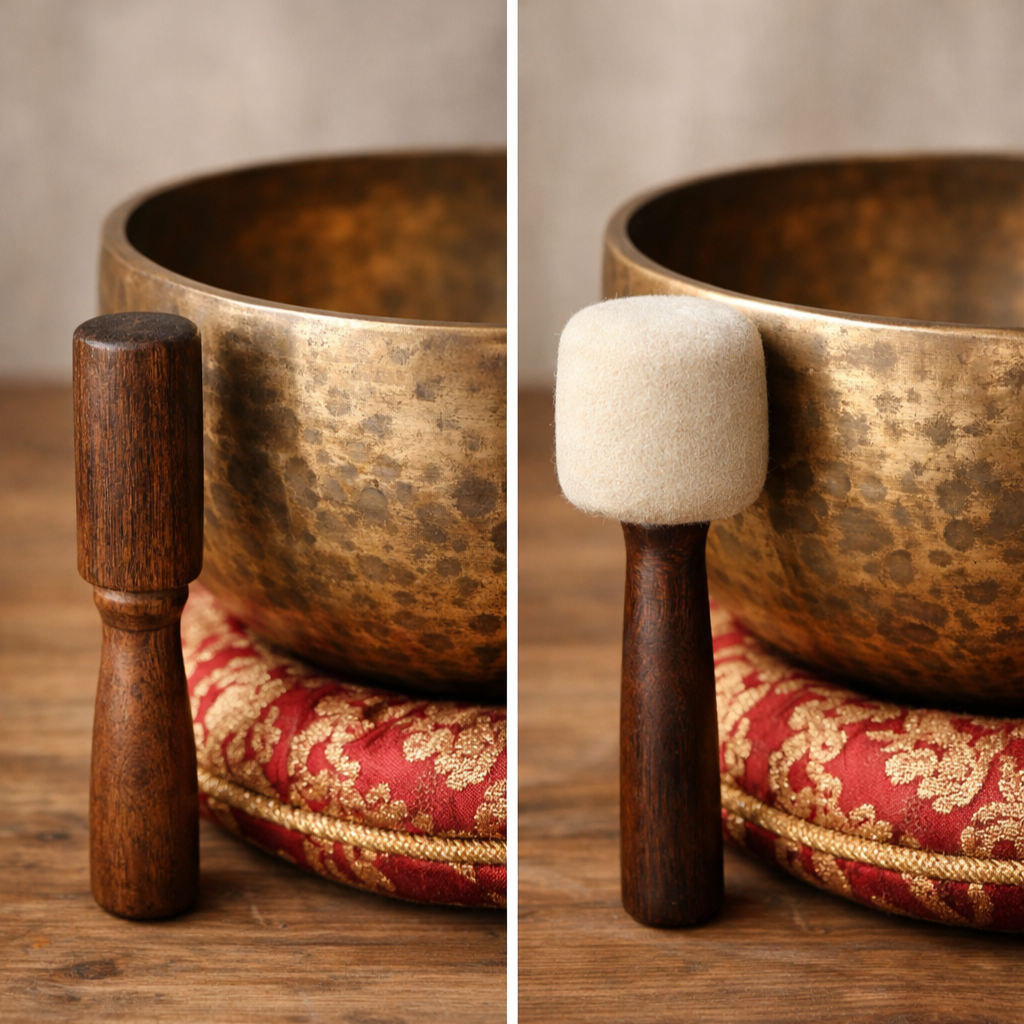
Many beginners think any mallet will work, but the type you use can completely change the sound. Singing bowls usually come with wooden or felt-covered mallets, each bringing out a different tone.
Wooden mallets create sharper, brighter sounds and work well for medium to large bowls.
Felt-covered mallets produce softer, warmer tones that are gentle on smaller or thinner bowls.
Using the wrong mallet can make your bowl sound harsh, uneven, or muted. For example, striking a delicate handmade bowl with a hard wooden mallet can produce a jarring tone, while a very soft mallet on a large bowl may not make it “sing” at all.
Tip: Experiment with the mallet that comes with your bowl, and notice how the sound changes with different mallets or striking techniques. Over time, you will find which mallet brings out the richest, clearest tones for your specific bowl.
2. Striking or Rimming Too Hard
A common mistake beginners make is thinking that hitting the bowl harder will make it sound better. In reality, striking or circling the rim too forcefully can produce harsh, uneven tones or unwanted buzzing. It can also shorten the life of your handmade bowl over time.
Handmade singing bowls respond best to gentle, steady pressure. When circling the rim, move the mallet slowly and consistently, allowing the bowl’s natural vibrations to develop. Even a small change in speed or pressure can make a big difference in the sound.
Tip: Focus on steady, calm movements rather than strength. Let the bowl “sing” naturally and listen carefully to how it responds. Over time, you’ll learn the right rhythm and pressure for a smooth, long-lasting tone.
3. Incorrect Bowl Placement and Hand Position
Many beginners don’t realize that how you hold or place your singing bowl affects its sound. Holding the bowl too tightly, letting your fingers touch the sides, or placing it on a hard or uneven surface can stop the vibrations from flowing. This can make the tone weak, muted, or uneven, even if you strike or circle it correctly.
Handmade bowls are meant to resonate naturally. To get the best sound, hold the bowl lightly in the palm of your non-dominant hand, keeping your fingers away from the sides. You can also place it on a soft cushion or cloth. This lets the bowl vibrate freely and produces a rich, clear, and lasting tone.
Tip: Try different placements by hand or on a soft surface and listen to how the sound changes. Small adjustments can make a big difference.
